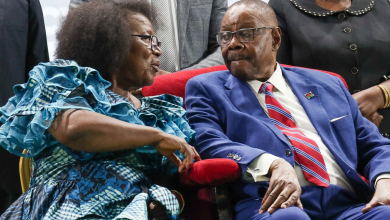
This week, Zimbabwe’s Justice Minister, Ziyambi Ziyambi, introduced a controversial constitutional amendment Bill seeking to extend President Emmerson Mnangagwa’s tenure from 2028 to 2030.
The legislation goes even further. If approved by Parliament, it would remove the power of ordinary Zimbabwean citizens to directly elect their President and instead hand that responsibility to Parliament. It also proposes to extend the terms of Members of Parliament, mayors and councillors from five years to seven.
In short, this bid isn’t just about extending the 83-year-old Zimbabwean leader’s stay in office. It could fundamentally reshape that country’s political and democratic architecture.
And as Malawians, we cannot pretend that Zimbabwe’s affairs are entirely foreign to us. Our two histories are too intertwined. For example, before our independence in 1964, we belonged to the same British colony dubbed the Federation of Rhodesia and Nyasaland, sharing not only borders, but also pain and political suffering at the hands of our colonial masters. That’s why whatever happens in Harare often also carries lessons for Malawi and Zambia.
Unsurprisingly, the move by Ziyambi Ziyambi, who is Mnangagwa’s ‘boy’, has generated fierce criticism both within and outside the governing Zanu-PF party, and indeed across southern Africa. Some statesmen and women view this move as less like constitutional reform and more like a carefully choreographed attempt to prolong the rule of an incumbent beyond his constitutional two-term limit that expires in 2028.
In my view, their fear is not entirely unfounded. Many Zimbabweans remember how a series of political manoeuvres, constitutional adjustments and electoral victories kept their former dictator, Mugabe, in power for 30 plus years. The concern, whispered in some quarters and openly expressed in others, is whether Zimbabwe is slowly retracing a familiar path—one that starts with partisan arguments about continuity and ends with a leader becoming a tyrant and permanent figure of the national landscape.
In fact, Zimbabweans might be forgiven for looking at their current predicament and remembering that Malawians have been there before. In the early 2000s, former president Bakili Muluzi, having discovered that power was sweeter than he had anticipated when he and others led the struggle to remove life president Hastings Kamuzu Banda from office, attempted to amend the Constitution to secure a third term.
UDF’s proposal was equally wrapped in the familiar language of continuity, stability and unfinished business and championed vigorously by several senior UDF figures, including the late Davis Kapito, who at the time served as the party’s influential Southern Region governor. Their argument was simple: “Bakili Muluzi had started important work and needed more time to finish it..”. Ironically, the same script has echoed across Africa for many decades whenever leaders or their supporters start flirting with constitutional amendments.
The difference, of course, is that Malawi’s institutions—Parliament, civil society groups, the media and other opponents— drew a line in the sand. The third-term and open-term bids failed, and Muluzi eventually left office. Did Malawi collapse? No! The sun still rises the following morning.
Zimbabwe itself offers perhaps the most striking example.
For decades, Mugabe appeared politically invincible. He was not merely Zimbabwe’s president; he had become synonymous with the Zimbabwean State. His supporters portrayed him as a liberation icon without whom the country could not function. Yet when he was forced out in 2017, Zimbabwe did not cease to exist.
The country’s problems remained. So did its people and life went on.
Nevertheless, Africa still has many bad apples in leadership. In Uganda, Yoweri Museveni recently oversaw the removal of presidential term limits and later the presidential age limit, allowing him to continue seeking re-election decades after first taking power. In Cameroon, Paul Biya removed term limits in 2008 and remains in office today, more than four decades after entering the presidency.
In Rwanda, constitutional changes enabled Paul Kagame to extend his political future well beyond previous restrictions. The list goes on.
But some led with good examples. Nelson Mandela understood this and after just one term, he walked away voluntarily, strengthening South Africa’s democratic institutions in the process. Tanzania’s Julius Nyerere stepped down just as Zambia’s Kenneth Kaunda eventually relinquished power. Their legacies are not diminished by their leaving office.
In short, constitutions are not designed to accommodate the ambitions of individual politicians. They exist precisely because human beings are susceptible to ambition.
Therefore, the men and women who drafted many African constitutions understood something that politicians, particularly those approaching the end of their tenure, often conveniently forget.
Power is never satisfied with its boundaries. Left unchecked, it always seeks to stretch itself a little further. That is why constitutions were designed to restrain leaders, not accommodate their ambitions.